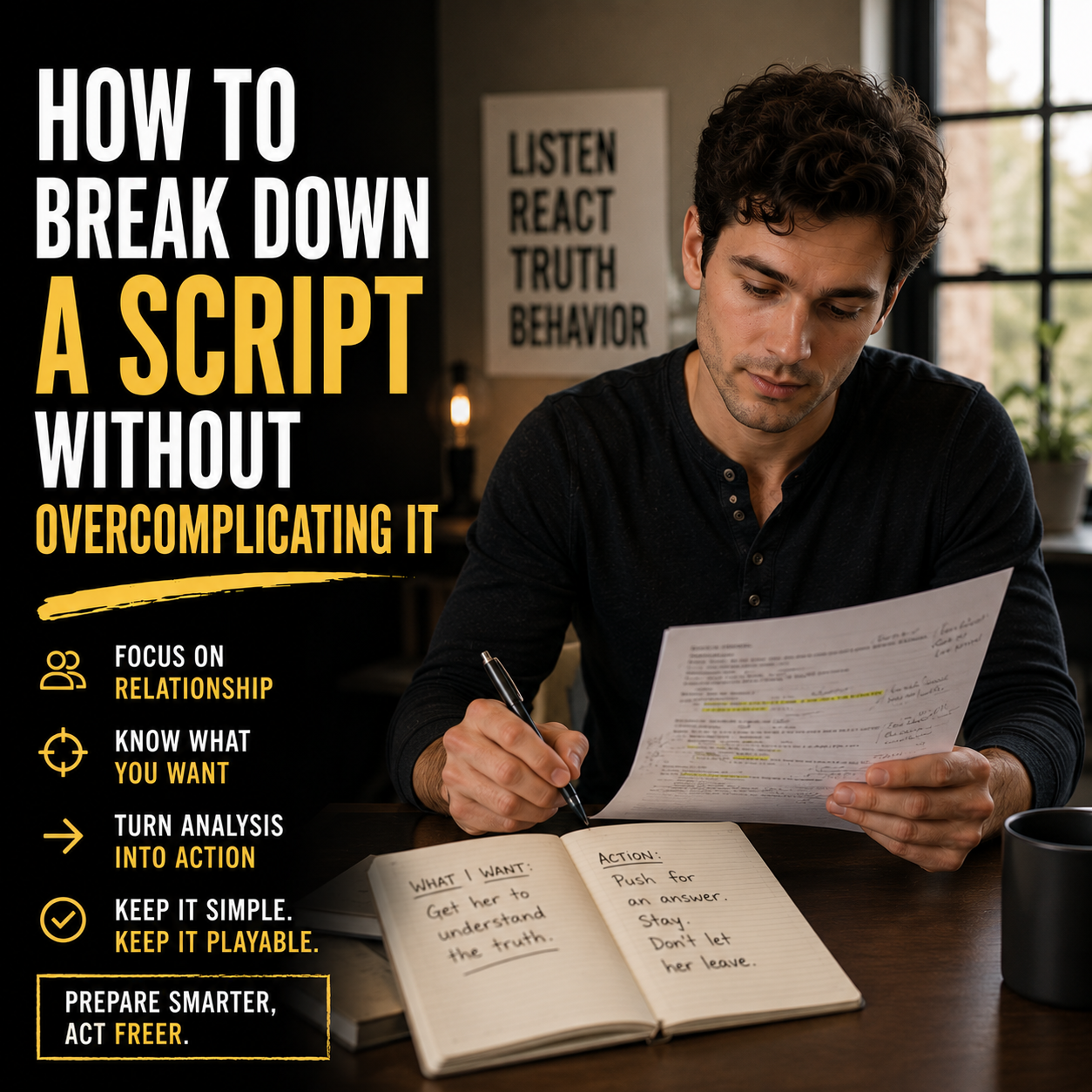
How to Break Down a Script Without Overcomplicating It
Most actors turn script analysis into homework. They write notes, label everything, try to understand every detail. And by the time they are done, they feel prepared. But when they actually start working, none of it helps. They are still in their head. That is because they prepared intellectually, not behaviorally. Script analysis should not make you tighter. It should make you more available.1. Stop Trying to Figure Out Everything
This is where most actors get stuck. They feel like they need to understand every line, every moment, every intention. So they over analyze. That creates pressure. You are trying to control the scene before it even happens. What to shift:- Let go of needing all the answers
- Focus on what is clear and playable
- Allow some things to reveal themselves in the moment
2. Focus on Relationship First
Before anything else, you need to know who you are talking to. Not just their role in the story, but what they mean to you. That is what gives the scene weight. Ask yourself:- Who is this person to me?
- What is my history with them?
- Why does this moment matter?
3. Identify What You Want
You do not need ten objectives. You need one clear direction. What are you trying to get from the other person? That is what drives behavior. Keep it simple:- Get them to stay
- Get them to forgive you
- Get them to tell you the truth
4. Turn Analysis Into Action
This is where most actors miss the mark. They understand the scene, but they do not translate it into something playable. Thinking is not enough. You need something you can actually do. In my acting classes online, we constantly bring actors back to action. Ask yourself:- What am I doing to the other person?
- How am I trying to affect them?
- Is this something I can actually play?
5. Do Not Lock in How It Should Sound
Actors often decide how lines should be said. They rehearse tone, rhythm, delivery. That disconnects you. You are now trying to recreate something instead of responding. What to do instead:- Stay flexible with the words
- Let the other person affect how you say them
- Allow variation each time you run it
6. Keep It Simple Enough to Use
If your script breakdown is too detailed, you will not use it. You will forget it as soon as you start acting. Good analysis is simple. It supports you without getting in your way. In my acting classes online, we strip things down so actors can actually apply them. What to look for:- Can you explain your approach in a few sentences?
- Do you know what you are doing without thinking about it?
- Does it free you up instead of tighten you?
What Good Script Analysis Actually Feels Like
When your preparation is working, it does not feel complicated. It feels clear. It feels like:- You know who you are talking to
- You know what you want
- You have something to do
- You are free to respond in the moment