Memorizing Lines, Getting Off the Page (Part 4 of a 4-Part Series: Performance Under Pressure)
By Richard Kline
This is Part 4 of a 4-part series on memorizing lines in a way that gets you off the page and into real acting. In Part 1 we built the foundation, meaning first, beats, verbs, and handwriting drills. In Part 2 we used listening and cue pickup to make the other person your memory trigger. In Part 3 we tightened accuracy without tension. Now we bring it into the real world. Auditions. Self tapes. Nerves. Time pressure. A reader who does not give you what you expected. A room that feels different than your bedroom at home. This is where memorization becomes professional. Not perfect. Professional.The Part 4 goal:
Keep the text clean while staying flexible and alive when something changes.
The Real Problem: You Memorized a Version, Not the Scene
Most actors memorize one version of a scene. One rhythm. One set of pauses. One emotional pathway. Then they walk into an audition and everything shifts. The reader is faster or slower. The energy is different. The room feels tense. And suddenly the actor starts reaching for the next line. If you feel that happening, it does not mean you are bad. It means you memorized the scene like a recording instead of like a conversation. Your job is to be able to play the scene even if the rhythm changes. The text stays accurate because the thought stays alive.The “3 Anchors” That Hold You Under Pressure
When you get nervous, you need something simple to return to. I use three anchors.- Meaning What am I really saying and why am I saying it right now?
- Action What am I doing to them in this beat? (verb)
- Trigger What in their line hits me and causes my response?
The Flex Run: Train for Change on Purpose
If you only practice the scene one way, you are training fragility. So do this drill. Run the same piece three times, each time with a different condition.- Run 1: normal pace, clean listening.
- Run 2: faster pace, stay grounded and clear.
- Run 3: slower pace, let the thoughts land, do not fill.
Important:
Flexibility is not sloppy. Flexibility is being able to stay alive while staying accurate.
Self Tape Reality: How to Work With a Reader
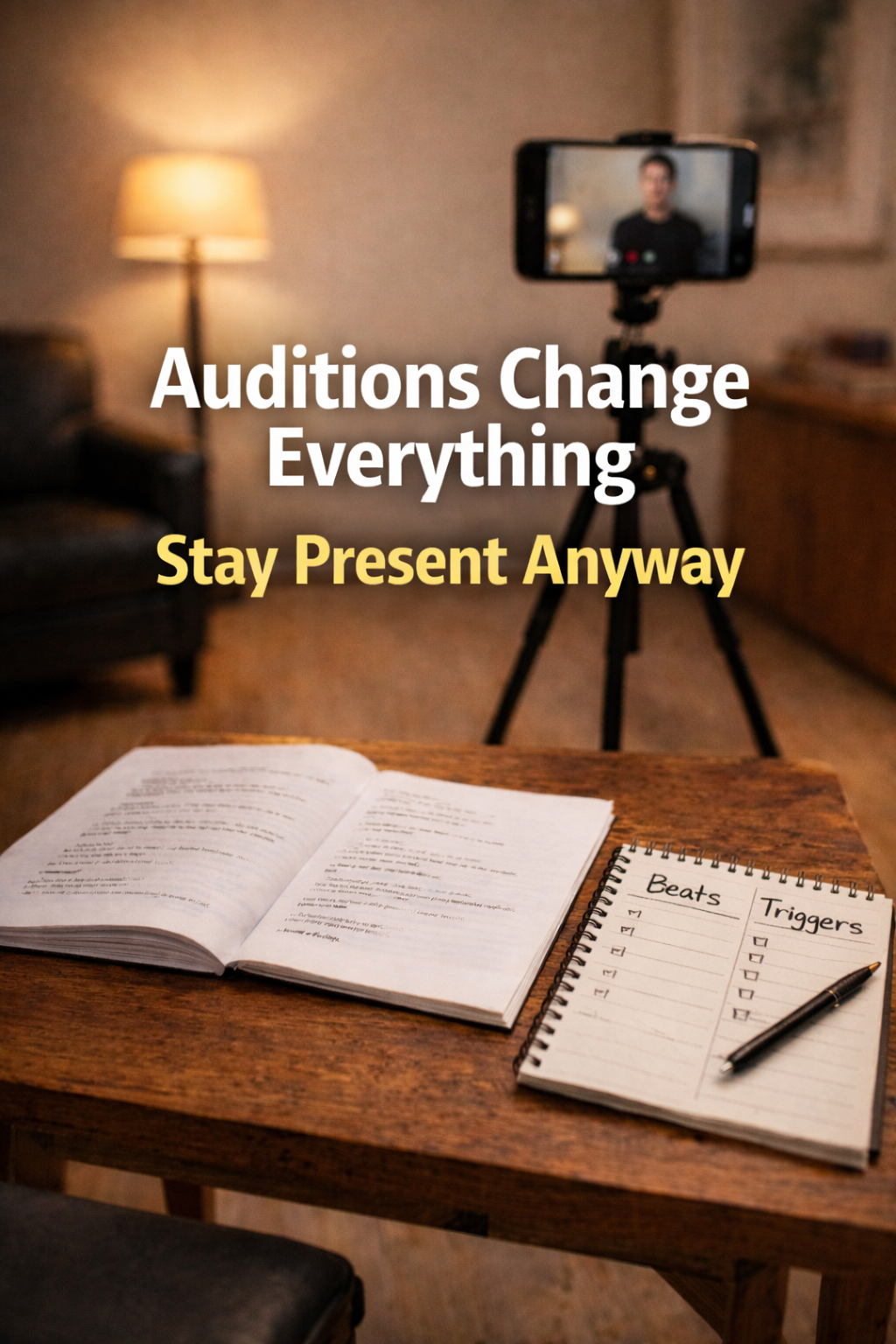
Most self tape problems are not camera problems. They are reader problems. Actors treat readers like a metronome. They wait. They recite. They do not receive. Here is what I want instead. Put the reader where you can genuinely look at them, slightly off camera. Then commit to actually letting their line affect you. Your cue is not “my turn.” Your cue is the moment something they say hits you and creates a thought. If your reader is inconsistent, good. It forces you to do the real work. Use the three anchors: meaning, action, trigger.What to Do If You Go Up on a Line
First, do not panic. Panic is what makes it worse. If you blank, do not sprint for the page. Stay in the scene. Stay in the relationship. Ask yourself, “What am I doing to them in this moment?” Often the line comes back as soon as the thought comes back. Because the words ride on the meaning. If it does not come back, paraphrase in character and keep moving. If you are in a live audition room, casting will forgive a small wording change far faster than they will forgive you freezing and apologizing.The “Compression Drill” for Last Minute Auditions
Sometimes you do not have days. You have an hour. Here is how you compress the work.- Paraphrase the whole thing once. Own the meaning.
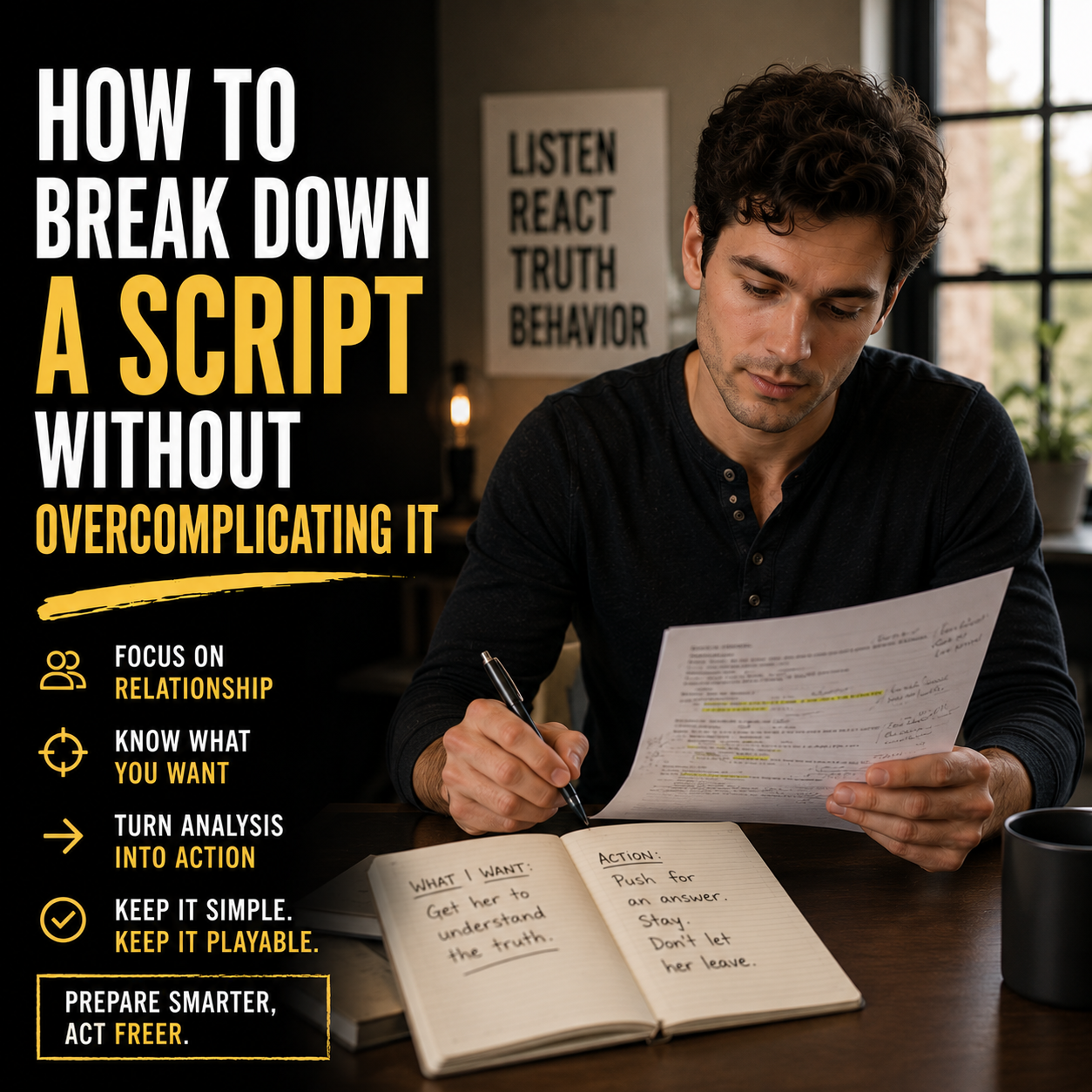
- Mark 3 to 6 beats. Keep it simple.
- Assign a verb to each beat. Action creates momentum.
- Choose one trigger word per cue. That becomes your pathway.
- Do one Clean Pass. Tighten the text.
- Do one Play Pass. Bring it back to life.
Performance: Let the Scene Do the Memorizing
Here is the final shift. When you perform, stop thinking, “I must remember.” Start thinking, “I must affect them.” When the action is clear and the relationship is real, the scene does the memorizing. Your job becomes simpler. Listen, receive, respond. That is the whole point of this series. Getting off the page is not about getting clever. It is about getting connected.Want Help Applying This to Your Actual Auditions?
Everything in this series is trainable. And it is much easier to build when someone can see what you are doing and help you adjust in real time.
Train this in the studio.
In my online acting classes, we work on memorization through meaning, beats, intention, and listening so your work stays alive and dependable under pressure. Join the workshop here: Richard Kline Online Acting Workshop
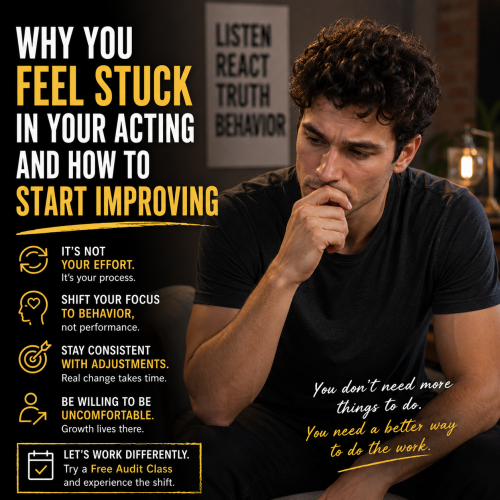
If you are new to the studio, start with a Free Audit Class and experience how we work before you commit.