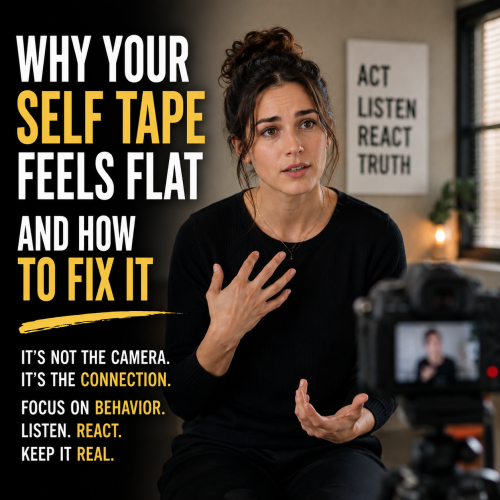
Scene Study for Actors: What You Should Actually Be Working On
Most actors use scene study to present work instead of changing how they work. Here’s what scene study should actually be doing for you if your training is working.
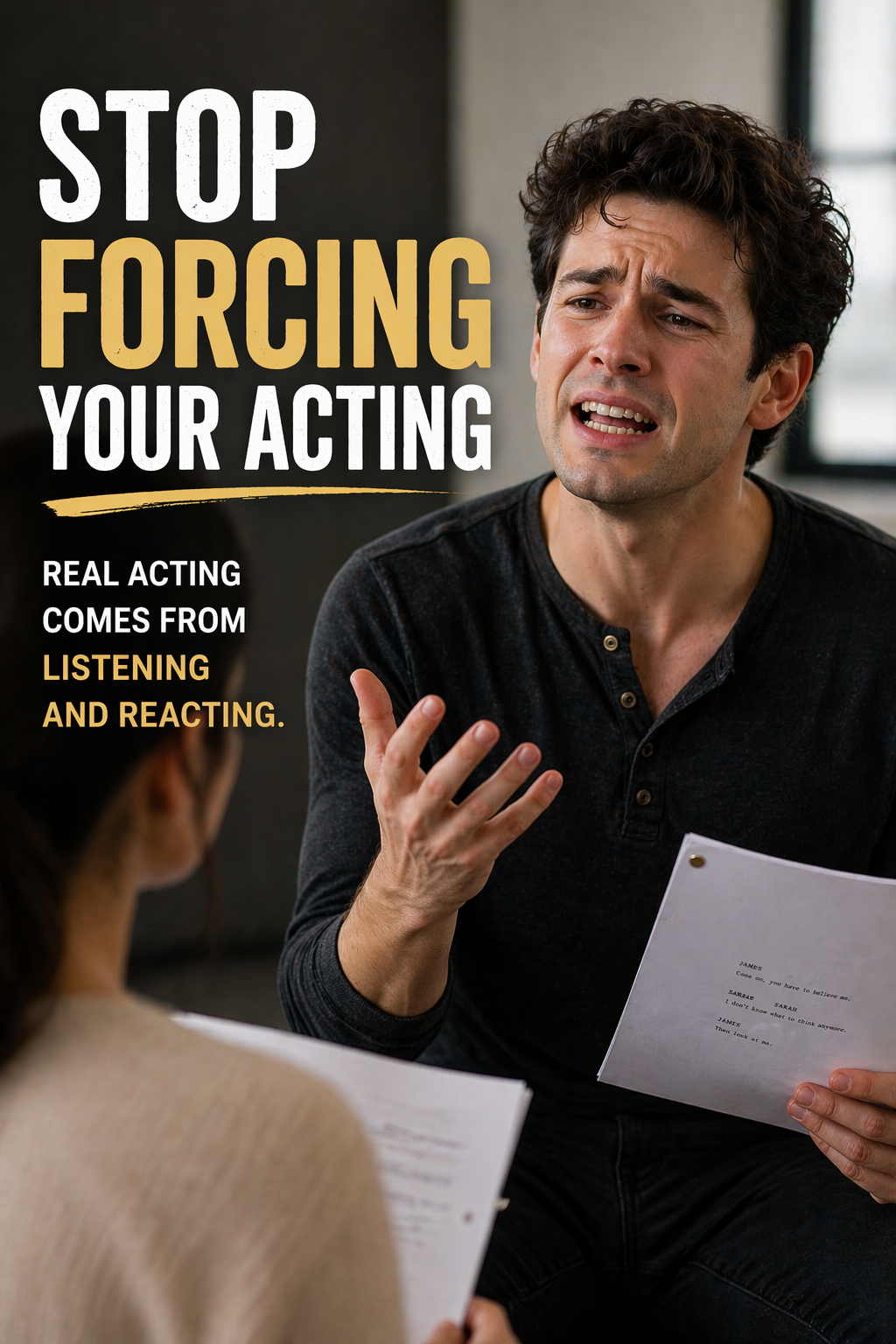
In-depth acting articles and insights on technique, auditions, and the business of acting. Written by a working actor and respected acting teacher, drawing from decades of studio training and professional experience.

Most actors use scene study to present work instead of changing how they work. Here’s what scene study should actually be doing for you if your training is working.

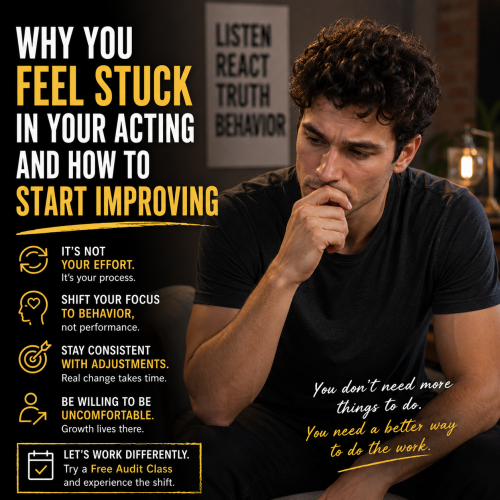
If your acting feels pushed or unnatural, it’s not a talent problem, it’s a process problem. Here’s what’s causing it and how to shift into work that actually feels real.


Cold reading isn’t about reading perfectly, it’s about staying connected when you don’t know what’s coming next. Here’s how to stop freezing up and start working truthfully in the moment.

If you feel like you’re working hard but not getting better, you’re not alone. The problem usually isn’t effort, it’s what you’re practicing and how you’re being guided.

Most actors pick a studio based on reputation, not results. Here’s how to actually choose a class that makes you better in the room.


No fluff, just solid advice about acting and your career.
Actors think preparation means having everything figured out.
They break down the script, plan the beats, decide how each moment should go.
And then they walk into the audition and none of it feels alive.
I hear this constantly, “I prepared so much, but it felt stiff.”
That’s not because you didn’t work hard. It’s because you prepared the wrong way.
Most actors over-prepare intellectually and under-prepare behaviorally.
So let’s shift that.
This is where most actors go off track.
They decide how the scene should feel, how emotional it should be, what the casting director should see.
That creates pressure.
Instead of listening, you’re trying to execute a plan.
In my class, we focus on behavior, not results.
What to shift:
If you are busy trying to get it right, you are not available to respond.
Preparation is not about locking in choices.
It is about understanding what is happening.
You need clarity on your objective and your relationship, but not a fixed performance.
What to prepare:
Leave space for how it comes out.
That is what makes it feel real.
3. Practice Listening, Not Performing
Most actors rehearse by running lines over and over.
They get smoother, but not more truthful.
Auditions are not about how well you can recite.
They are about how well you respond.
In my acting classes online, we spend a lot of time breaking this habit.
Try this instead:
If it changes every time, you are on the right track.
Overthinking does not start in the room.
It starts before you even walk in.
Actors run the scene in their head, rehearse silently, try to lock everything in.
By the time they start, they are already disconnected.
What to do instead:
You do not need to be perfect. You need to be present.
Big emotional ideas will pull you into your head.
Playable actions keep you grounded.
Instead of thinking about emotion, think in terms of action.
Examples:
These are things you can actually do.
When you focus on action, emotion takes care of itself.
There is a point where more preparation starts to hurt you.
If you keep adding layers, you lose flexibility.
Good preparation gives you a foundation.
It does not lock you into one version.
In my acting classes online, I will often stop actors from overworking a scene so they can stay responsive.
What to look for:
If the answer is yes, you are ready.
When you prepare the right way, it feels different.
It is not tight. It is not controlled.
It feels like:
That is when casting starts to lean in.
Because it feels alive.
How do I prepare for an audition without overthinking?
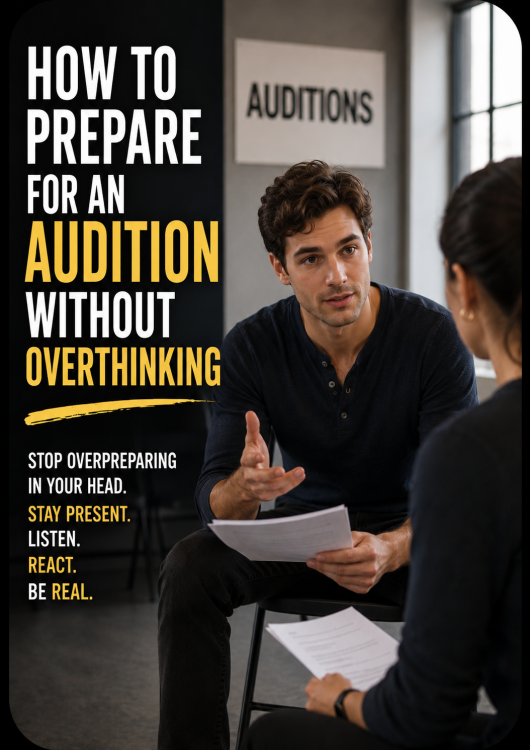
Focus on behavior and listening instead of planning results. Prepare what you are doing, not how it will look.
Should I rehearse my audition multiple times?
You can run the scene, but avoid locking in one version. Keep it flexible so you can respond in the moment.
What is the most important part of audition preparation?
Understanding your objective and staying connected to the other person.
How do I stop being in my head during auditions?
Shift your attention to the other person and what you are trying to do to them.
Do casting directors want a polished performance?
They want something real and responsive, not something over-rehearsed.
If your preparation is making you tighter instead of freer, it is time to adjust how you work.
Focus on listening, behavior, and real connection.
That is what we train every week in my acting classes online.
You can start with a Free Audit Class and see how quickly this shifts when you experience it.
When you stop overthinking, auditions stop feeling like something you have to control and start feeling like something you can actually live in.