
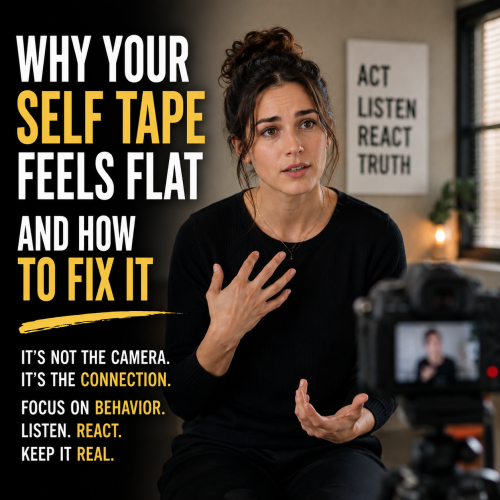
Why Your Self Tape Feels Flat and How to Fix It
If your self tape feels flat, it is not a camera problem, it is a connection problem. Learn how to bring your work to life by focusing on behavior instead of performance.
In-depth acting articles and insights on technique, auditions, and the business of acting. Written by a working actor and respected acting teacher, drawing from decades of studio training and professional experience.

If your self tape feels flat, it is not a camera problem, it is a connection problem. Learn how to bring your work to life by focusing on behavior instead of performance.

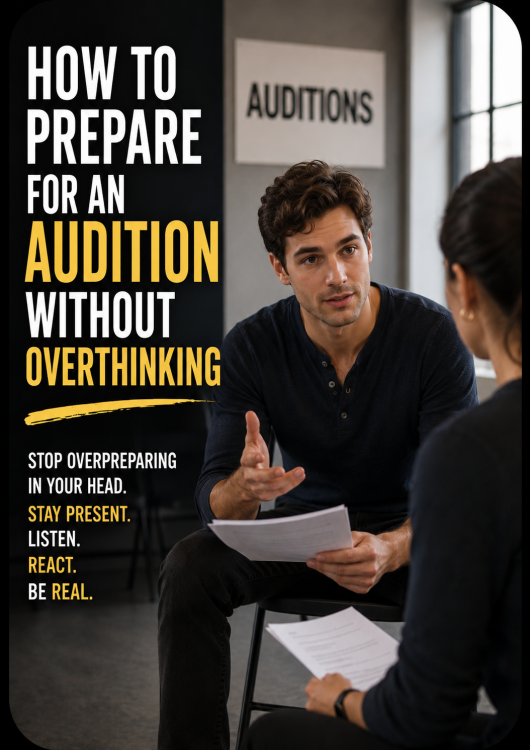
Most actors over prepare in their head and lose what actually makes a performance feel real. Learn how to prepare for auditions in a way that keeps you present, responsive, and alive in the moment.

Not all acting classes actually change your work, even if they feel productive. Here’s how to tell if your training is moving you forward or just keeping you busy.
Most actors use scene study to present work instead of changing how they work. Here’s what scene study should actually be doing for you if your training is working.
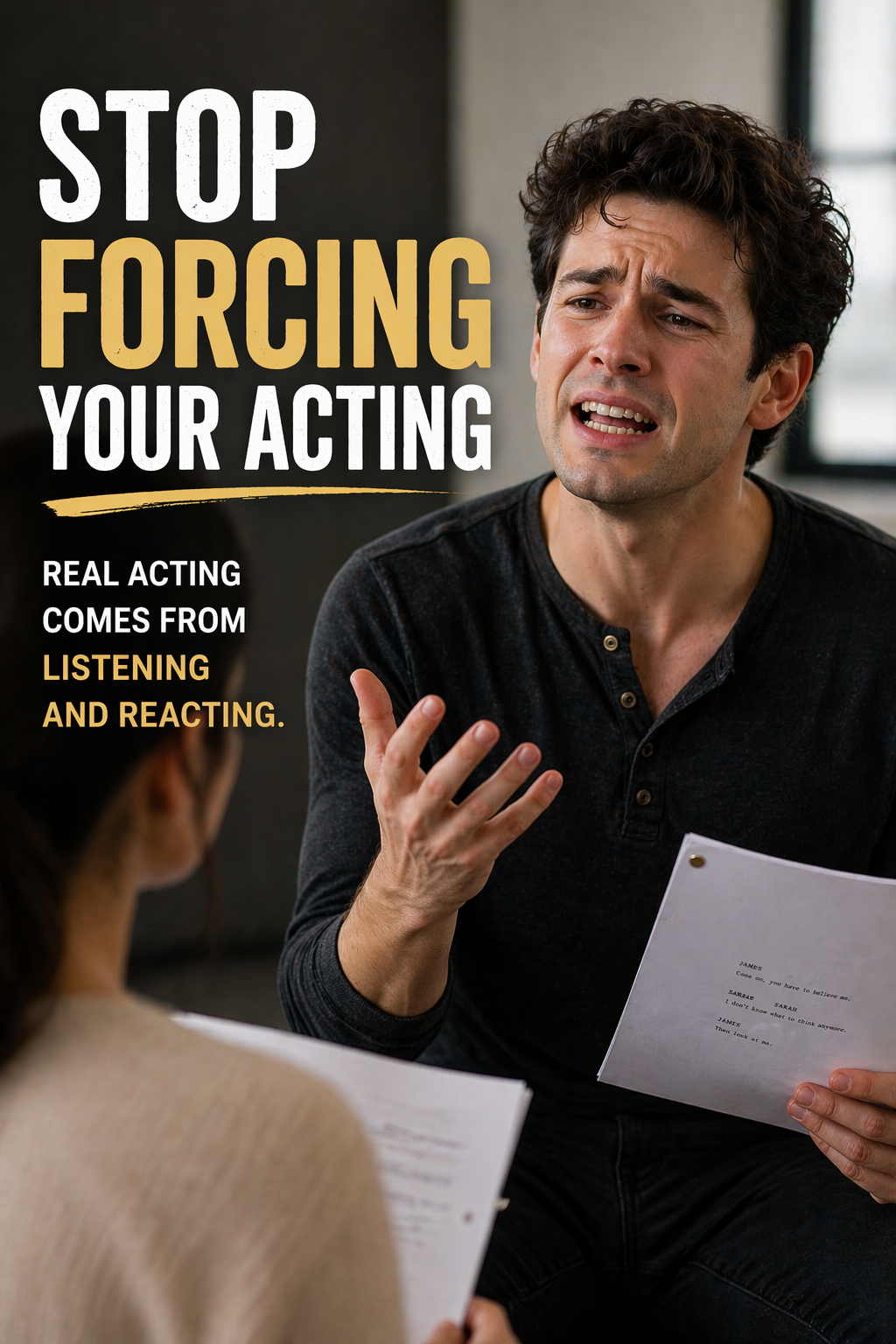
If your acting feels pushed or unnatural, it’s not a talent problem, it’s a process problem. Here’s what’s causing it and how to shift into work that actually feels real.




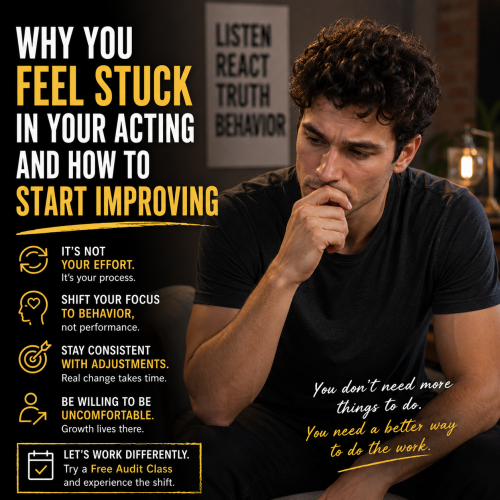
No fluff, just solid advice about acting and your career.
Every acting teacher tells you to listen.
It sounds simple.
So why is it one of the hardest things for actors to do?
Because most actors confuse hearing with listening.
They hear every word their scene partner says, but inside, they are thinking about the next line, the next emotion, or the next moment they planned.
That is not listening.
Real listening changes you.
If nothing changes inside you during a scene, chances are you were never really listening in the first place.
Hearing Is Automatic. Listening Is Active.
You cannot help hearing.
If someone speaks, your ears pick it up.
Listening is something completely different.
Listening means allowing another person’s words, behavior, and energy to affect you.
Think about a real conversation.
Has someone ever surprised you?
Made you laugh when you were trying to stay serious?
Said something that completely changed your mood?
That is listening.
Those moments are interesting because they are real.
As actors, we are trying to recreate that same experience.
Stop Waiting for Your Turn to Talk
One of the biggest habits actors develop is waiting.
The other actor speaks.
You wait.
They finish.
Now it is your turn.
The problem is that nothing is actually happening between those moments.
Instead of waiting, become curious.
Ask yourself:
When those questions stay alive, the scene stays alive.
Every Line Should Affect You
Imagine having the same conversation with your best friend every day for a week.
Would every conversation be identical?
Of course not.
Something new would happen every time.
A different tone.
A different thought.
A different reaction.
Great acting works the same way.
Every line your partner gives you is new information.
Let it land.
You do not need to force a reaction.
You simply need to allow yourself to receive it.
Sometimes the biggest reaction is not visible at all.
It happens internally first.
The audience can feel that.
The Audience Loves Watching Someone Think
One of the most fascinating things an audience can watch is someone thinking.
Not pretending to think.
Actually thinking.
You can see it in their eyes.
You can feel them processing what just happened.
That is why quiet performances are often more compelling than loud ones.
The actor is alive.
Their thoughts are happening in real time.
The audience leans in because they are discovering the moment with them.
Listening Creates Behavior
Actors often ask how to make their performances more natural.
The answer is usually simpler than they expect.
Stop trying to create behavior.
Start listening.
When someone genuinely affects you, behavior happens on its own.
Maybe you smile.
Maybe you lean back.
Maybe you hesitate before speaking.
Maybe you laugh.
Maybe you say nothing.
Those behaviors are interesting because they are truthful.
They were not invented.
They were discovered.
This is one of the core ideas we explore in my acting classes online. When actors stop planning every moment and start responding honestly, their work becomes more believable almost immediately.
Listening Builds Real Relationships
Every scene is a relationship.
Whether you are speaking to your spouse, your boss, your child, or your biggest enemy, the relationship is what gives the scene life.
If you stop listening, the relationship disappears.
The scene becomes two actors taking turns saying lines.
But when you stay connected to the other person, every moment becomes personal.
Every word matters.
Every silence matters.
The relationship becomes the performance.
How to Practice Listening
Listening is a skill.
Like any skill, it improves with practice.
The next time you rehearse a scene, challenge yourself to stop thinking about how you are going to say your next line.
Instead:
You may feel less in control at first.
That is actually a good sign.
Real conversations are not controlled.
They are discovered.
The Best Performances Feel Like They Are Happening for the First Time
One of the greatest compliments an actor can receive is that their performance felt completely natural.
That does not happen because they memorized their lines better.
It happens because they stayed available.
They stayed curious.
They kept listening.
Even after rehearsing the scene dozens of times, they treated each moment as if they had never heard it before.
That is what keeps a performance fresh.
That is what keeps an audience watching.
Final Thought
Listening is not a technique you add to your acting.
It is the foundation that everything else grows from.
When you truly listen, you stop trying to manufacture emotion.
You stop forcing behavior.
You stop performing.
Instead, you allow yourself to experience what is happening in front of you.
That is where truthful acting begins.
If you want to develop this kind of work in a supportive, practical environment, join a Free Audit Class and experience how listening, reacting, and relationship can transform your auditions, scene study, and professional acting.
FAQ: Listening in Acting
Why is listening important in acting?
Listening allows an actor to respond truthfully instead of relying on planned reactions. It creates performances that feel natural and alive.
What is the difference between hearing and listening?
Hearing is automatic. Listening means allowing what another person says and does to genuinely affect your thoughts and behavior.
How can I become a better listener as an actor?
Focus your attention on your scene partner instead of your own performance. Stay curious, remain present, and let yourself be surprised.
Can listening improve my auditions?
Yes. Casting directors are drawn to actors who feel connected and present. Strong listening creates more believable and engaging auditions.
Why do my scenes sometimes feel rehearsed?
Scenes often feel rehearsed when actors focus on repeating planned choices instead of responding to what is happening in the moment.
