

Why Great Actors Never Stop Listening
Most actors think listening means waiting quietly for their next line. Great actors know that real listening changes everything, and it is one of the biggest reasons their performances feel alive.
In-depth acting articles and insights on technique, auditions, and the business of acting. Written by a working actor and respected acting teacher, drawing from decades of studio training and professional experience.

Most actors think listening means waiting quietly for their next line. Great actors know that real listening changes everything, and it is one of the biggest reasons their performances feel alive.

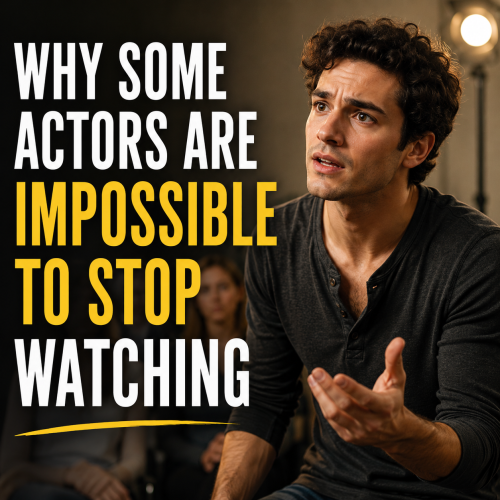
Some actors capture your attention without doing very much at all. Learn why truly watchable performances come from connection, not performance, and how you can bring that same quality into your own work.

If your work feels general, it is not personal enough. The personal monologue teaches you how to bring your real life, your truth, and your emotional connection into every role you play.
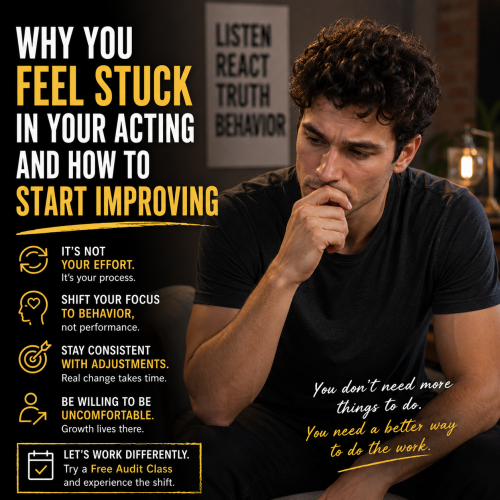
If you feel stuck in your acting, it is not because you are not working hard enough. Learn what is actually holding you back and how to shift your process so your work starts to change.
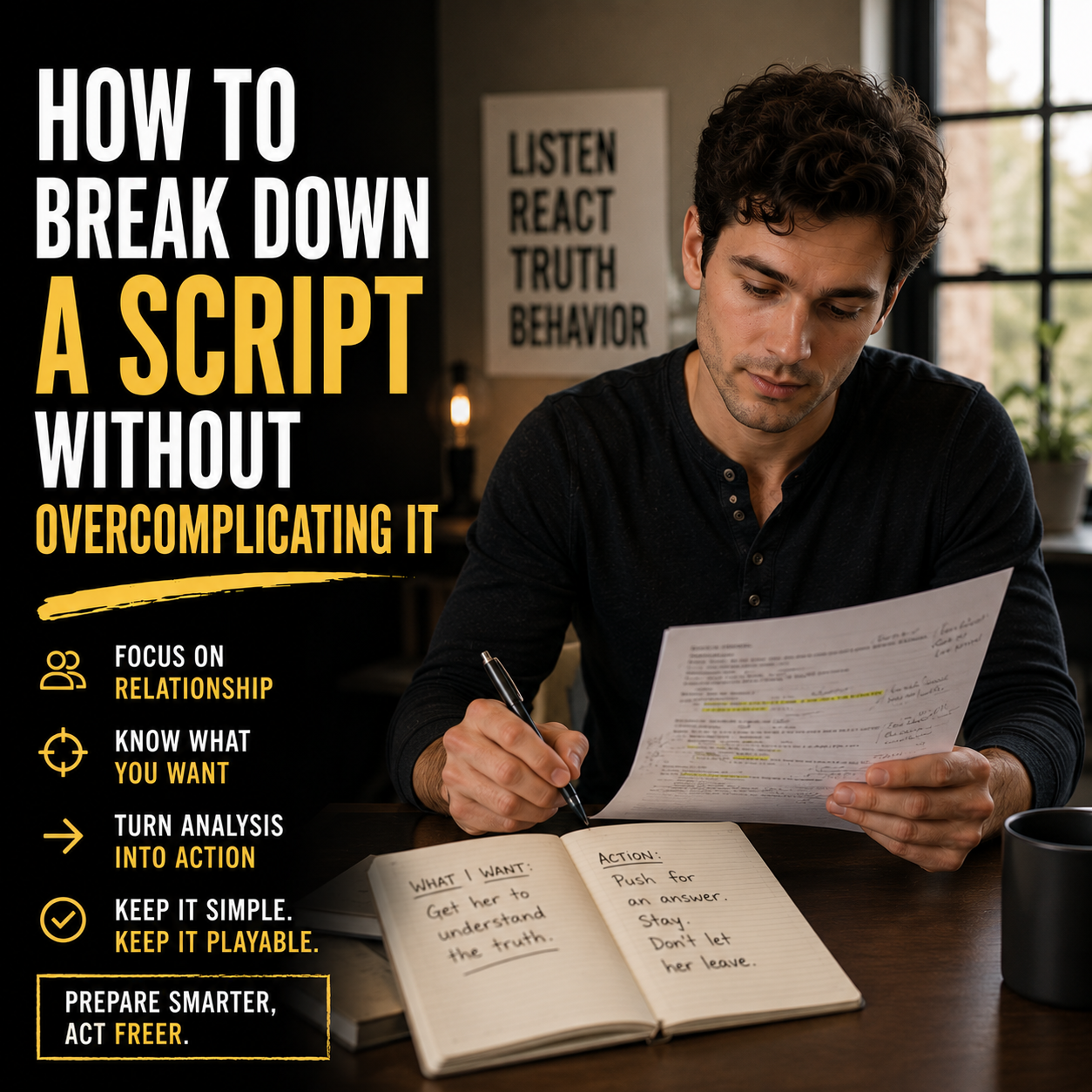
Most actors turn script analysis into something heavy and confusing that does not actually help their performance. Learn how to break down a script in a simple, usable way that keeps you connected and responsive.


No fluff, just solid advice about acting and your career.
Have you ever watched an actor who completely held your attention, even though they were not crying, shouting, or delivering some huge dramatic speech?
Nothing about the performance seemed forced. They were simply there, living truthfully in the moment. You could not look away.
Then you’ve probably seen the opposite.
An actor who works incredibly hard, makes big choices, shows lots of emotion, and somehow leaves you feeling… nothing.
Why?
Because being watchable has very little to do with doing more.
It has everything to do with being genuinely affected by what is happening.
The audience is not watching to see what you do next.
They are watching to see what happens to you next.
Stop Trying to Be Interesting
One of the biggest traps actors fall into is trying to make themselves interesting.
They push emotions.
They add little performances.
They plan reactions.
They try to impress the audience.
Ironically, every one of those choices makes them less watchable.
The audience is incredibly good at sensing when an actor is trying to create a moment instead of experiencing one.
Real people are interesting because they are invested in what they want, not because they are trying to look interesting.
The same is true for actors.
Watchability Comes From Relationship
The most compelling actors are not focused on themselves.
They are focused on the other person.
They are listening.
They are reacting.
They are allowing themselves to be surprised.
That is where behavior comes from.
If your attention is on your performance, you stop living inside the relationship.
Instead, ask yourself:
Those questions create life.
Trying to create a great performance rarely does.
Great Acting Feels Unplanned
Think about the people you know best.
Do they pause in exactly the same places every conversation?
Do they laugh on cue?
Do they always know exactly what they are going to say next?
Of course not.
Real behavior is unpredictable because people are constantly taking in new information.
Great acting works the same way.
When an actor already knows exactly how every line will sound before the scene begins, there is nothing left to discover.
The audience feels that.
What they enjoy watching is discovery.
They enjoy seeing thoughts happen in real time.
Let Yourself Be Affected
Many actors believe they need to create emotion.
I would argue the opposite.
You do not create emotion.
You allow yourself to be affected.
If someone insults you, you do not decide how to feel.
It happens.
Your work as an actor is to stay open enough for that process to happen inside the scene.
When you stop forcing feelings and start receiving what the other actor is giving you, everything becomes more truthful.
That is where watchability begins.
Control Is the Enemy of Truth
Actors often think confidence means controlling everything.
Controlling every pause.
Every gesture.
Every emotional beat.
But the more control you need, the less alive the work becomes.
Truth is messy.
People interrupt themselves.
They change their minds.
They hesitate.
They discover thoughts halfway through a sentence.
When you leave room for those moments, the audience leans in because they feel they are watching something happen for the first time.
This is one of the core ideas we work on in my acting classes online. Instead of planning performances, actors learn to trust what is happening between themselves and the other person.
Being Present Is More Powerful Than Being Emotional
A common misconception is that emotional acting is automatically good acting.
It is not.
You can cry through an entire scene and still leave the audience disconnected.
On the other hand, an actor quietly listening can be impossible to stop watching.
Why?
Because they are present.
You can actually see the thoughts moving through them.
You can see them processing.
You can see them changing.
The audience connects with that far more than emotional display.
How to Become More Watchable
Instead of asking yourself how to give a better performance, try asking different questions.
Those questions will take your work much further than trying to be bigger, louder, or more emotional.
Watchable actors are not performing for us.
They are living through something while we happen to be watching.
Bring This Into Every Role
Whether you are working on a self tape, a scene study assignment, or a television audition, the goal stays the same.
Be available.
Be curious.
Be willing to let the other person affect you.
The audience does not need perfection.
They need truth.
When your attention stays on the relationship instead of the result, your work naturally becomes more compelling.
It becomes watchable.
Final Thought
Actors often ask what makes one performance unforgettable while another fades away.
It is rarely because one actor had better technique.
It is because one actor stopped trying to perform and started living inside the circumstances.
That is what audiences remember.
That is what casting directors remember.
And that is what keeps people watching.
If you want to experience this kind of work for yourself, join a Free Audit Class and discover how listening, reacting, and truthful behavior can transform your auditions, scene study, and professional acting.
FAQ: Becoming a More Watchable Actor
What makes an acting performance watchable?
A watchable performance comes from truthful behavior, genuine listening, and allowing yourself to be affected by the other person instead of trying to impress the audience.
Do great actors plan every moment?
No. Great actors prepare thoroughly, but they leave room for discovery. The performance should feel like it is unfolding for the first time.
Can a quiet performance still be compelling?
Absolutely. Some of the most memorable performances are subtle because the actor is fully present and emotionally available.
How do I become more present in a scene?
Shift your focus away from yourself and toward your scene partner. Listen carefully, pursue what you want, and allow yourself to react honestly.
How can I practice this approach?
Scene study is one of the best ways to develop these skills. Working consistently with truthful listening and reacting helps make your performances more natural and engaging.
