
Acting Insights with Richard Kline

In-depth acting articles and insights on technique, auditions, and the business of acting. Written by a working actor and respected acting teacher, drawing from decades of studio training and professional experience.

Subscribe To Our newsletter

behind the scenes

On Top

Recent Articles

A Note On Memorization – Part 2

Have your script memorized but always hold your copy. That’s your professional responsibility; it’s your best take and you want to sell it. If you

Tap Into Your Creativity

People take acting classes for different reasons. Yes, if you are actively pursuing a career in the arts, by all means work on the craft

Harlem

Richard appears on this new Amazon Prime show. Season I, Episode 3.

Social Media

New From Animag

Get The Latest

Subscribe To My Weekly Newsletter

No fluff, just solid advice about acting and your career.

Categories

How to Know If an Acting Class Is Actually Helping You Improve

Actors stay in classes for years.

They show up, do scenes, get feedback, feel like they’re working.

But their acting doesn’t really change.

I hear this all the time, “I’m taking classes, but I still feel stuck.”

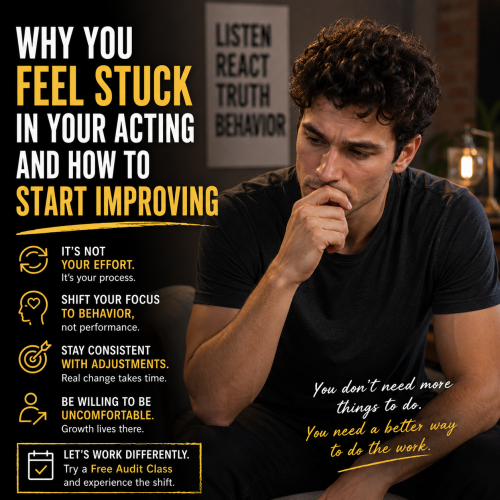
That’s not about effort. It’s about what the class is actually doing.

So how do you know if your acting class is helping you, or just keeping you busy?


1. You’re Getting Feedback, But Nothing Is Changing

This is the first sign.

You do a scene, you get notes, you understand the notes.

Then the next week, you’re doing the same thing again.

That means the feedback isn’t actually shifting your behavior.

In my class, I’m not just giving notes. I’m working with you until something actually changes.

What to look for:

  • Are the notes specific to your habits?
  • Are you being pushed to apply them, not just hear them?
  • Do you feel a real shift in how you’re working?

If nothing is changing, the training isn’t landing.


2. You Feel Good After Class, But It Doesn’t Carry Over

Some classes feel great.

You leave feeling inspired, motivated, like you did good work.

But then you get to an audition, and everything feels the same.

That’s a disconnect.

What to look for:

  • Does your class work show up in your auditions?
  • Are you approaching self tapes the same way?
  • Is your process consistent across both?

If your training doesn’t translate, it’s staying on the surface.


3. You’re Not Being Challenged

If you’re always comfortable in class, that’s a problem.

Growth doesn’t feel comfortable.

It feels uncertain. It feels like you don’t quite have control.

In my class, I’ll push actors past what feels safe. That’s where the work actually shifts.

What to look for:

  • Are you being pushed out of your habits?
  • Are adjustments making you uncomfortable in a good way?
  • Are you being asked to try things you wouldn’t choose on your own?

If you’re always in control, you’re probably not changing.


4. You’re Doing Scenes, But Not Working on Process

Actors often think more scenes equals more growth.

It doesn’t.

If your process stays the same, the results stay the same.

This is something I come back to constantly in class. The scene isn’t the point. How you work is the point.

What to look for:

  • Is the class focused on your process, not just the scene?
  • Are you being redirected when you start controlling or planning?
  • Is there a clear approach being reinforced every week?

Without process, you’re just repeating yourself.


5. You’re Performing Instead of Practicing

This is a big one.

If you feel like you have to be good in class, you’re not going to take risks.

And if you don’t take risks, nothing changes.

In my class, it’s not about showing your best work. It’s about actually working.

What to look for:

  • Do you feel free to be messy?
  • Are you encouraged to try things that might not “work”?
  • Is the class a lab, or a performance space?

The faster actors improve, the more willing they are to not look good while they’re learning.


6. You’re Not Staying with Adjustments Long Enough

Real change takes repetition.

But a lot of classes move too quickly.

New scene, new notes, new direction, without ever going deep.

In my acting classes online, I’ll keep actors on adjustments until they actually start to take hold.

What to look for:

  • Are you repeating adjustments week to week?
  • Are you going deeper into the same issue?
  • Do you feel something starting to shift over time?

If everything is new every week, nothing sticks.


What a Good Acting Class Actually Feels Like

When the training is working, it doesn’t just feel good.

It feels like something is changing.

It feels like:

  • You’re more focused on the other person
  • You’re less in your head
  • You’re taking adjustments and they’re actually affecting you
  • You don’t know exactly what you’re going to do, and that’s okay

That’s when you know the work is landing.


FAQ: Choosing an Acting Class

How do I know if an acting class is good?
A good class challenges your habits and changes how you work, not just how you perform.

Should I switch acting classes if I feel stuck?
If nothing is changing and you’re not being challenged, it may be time to find a different approach.

How long should I stay in an acting class?
Long enough to apply adjustments and see real change, not just attend.

Do online acting classes work?
Yes, if they focus on real-time adjustments, listening, and behavior, not just feedback.

What should I look for in an acting teacher?
Someone who identifies your habits clearly and pushes you to change them.


Looking for Training That Actually Moves You Forward?

If your class isn’t changing anything, it’s not about doing more. It’s about working differently.

Focus on training that builds real listening, real behavior, and real connection.

That’s what we focus on in my acting classes online.

You can also start with a Free Audit Class and experience how the work actually feels.

When the training is right, you don’t just feel better after class. You actually start to change.

Written by your acting coach, Richard Kline.