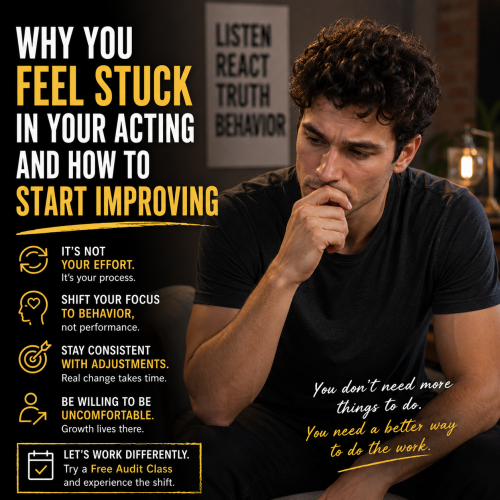

Why You Feel Stuck in Your Acting and How to Start Improving
If you feel stuck in your acting, it is not because you are not working hard enough. Learn what is actually holding you back and how to shift your process so your work starts to change.
In-depth acting articles and insights on technique, auditions, and the business of acting. Written by a working actor and respected acting teacher, drawing from decades of studio training and professional experience.

If you feel stuck in your acting, it is not because you are not working hard enough. Learn what is actually holding you back and how to shift your process so your work starts to change.

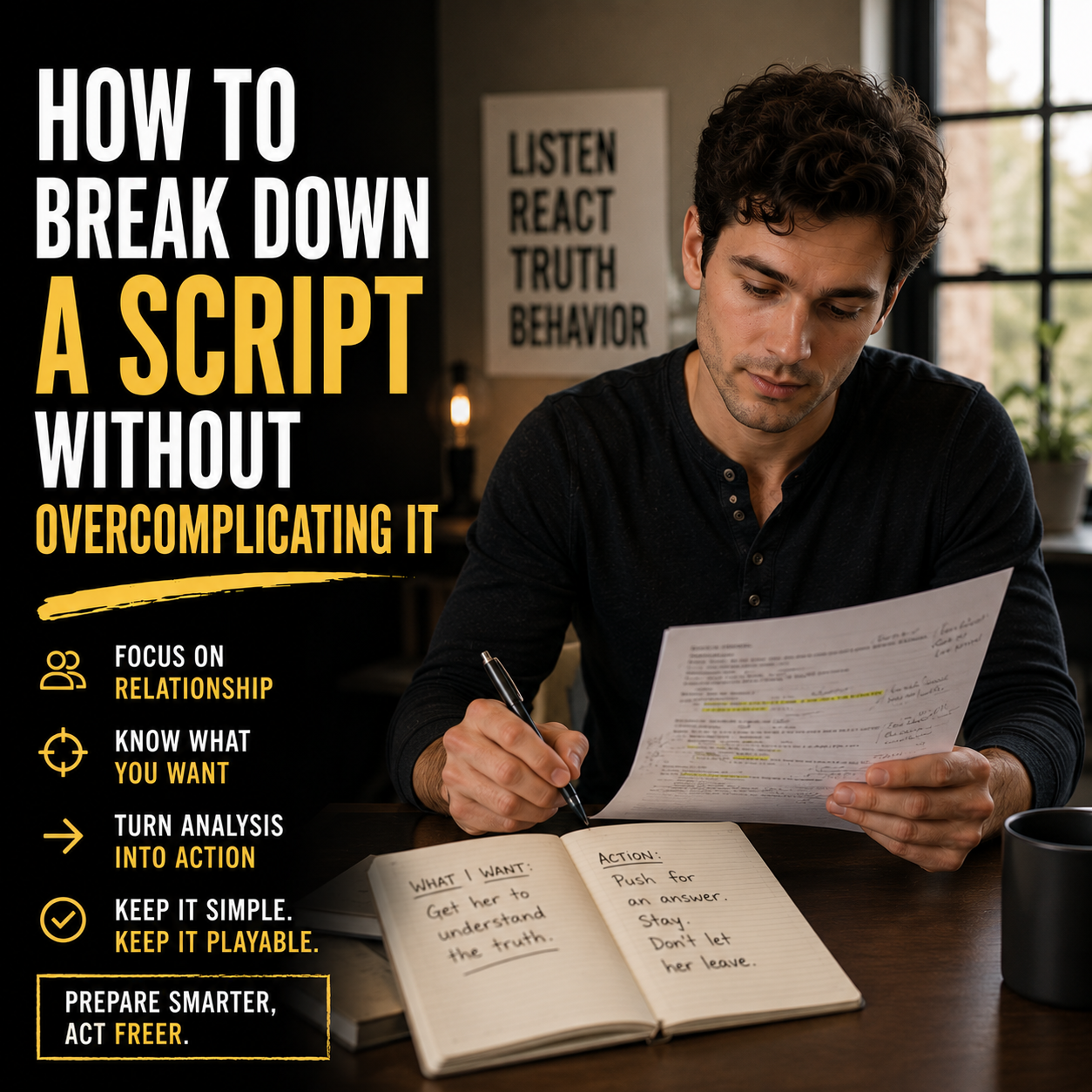
Most actors turn script analysis into something heavy and confusing that does not actually help their performance. Learn how to break down a script in a simple, usable way that keeps you connected and responsive.
If your self tape feels flat, it is not a camera problem, it is a connection problem. Learn how to bring your work to life by focusing on behavior instead of performance.

Most actors over prepare in their head and lose what actually makes a performance feel real. Learn how to prepare for auditions in a way that keeps you present, responsive, and alive in the moment.

Not all acting classes actually change your work, even if they feel productive. Here’s how to tell if your training is moving you forward or just keeping you busy.


No fluff, just solid advice about acting and your career.
Most actors choose an acting studio the same way they choose a restaurant. They go by reputation, reviews, or what they’ve heard.
If your goal is to become a stronger actor, someone who can walk into auditions and actually work, then you need to choose a studio based on what it teaches you to do, not what it promises.
Every acting studio says they “teach technique.” That doesn’t mean much.
What matters is what you are actually doing in class, week after week.
A strong acting class should train:
Actors grow by doing. In my acting classes online, you WORK, more than once a session.
Listen closely to how the teacher adjusts actors.
Weak direction sounds like this:
These are results. They don’t tell you what to do. Uta Hagen once said “playing mood is doom spelled backwards.”
Strong direction sounds different:
Now you’re working.
In my acting classes online, actors start to build something real, something they can rely on
under pressure.
Never choose a studio blindly.
When you audit my class, I will give you a short monologue for my assessment.
When you audit, ask yourself:
4. Look for a Process You Can Repeat Outside of Class
A great acting studio doesn’t just help you in class.
It gives you a way to work on your own.
You should leave with a clear approach to:
Script analysis
Breaking down beats
Preparing for auditions
Working with a partner
If you can’t take what you’re learning and apply it to a self tape or audition, the training isn’t complete.
This is where many actors get stuck. They feel good in class, but lost when they’re on their own.
That gap matters.
It comes down to this:
If the answer is yes, you’re in the right place.
If not, keep looking.
Your training shapes everything, your auditions, your confidence, your growth.
It’s worth choosing carefully.
If you’re looking for a place to build that kind of process, you can explore my acting classes online that focus on listening, behavior, and real-time work.
You can also sit in on a class first. A Free Audit Class gives you a chance to see the work up close before committing.
No guessing, just clarity.
How do I know if an acting class is good?
Look for real behavioral change in actors, not just polished performances. Good classes teach process, not results.
Should I choose an acting studio based on reputation?
Reputation can help, but it shouldn’t be the deciding factor. Focus on what and how the studio actually teaches.
Are online acting classes effective?
Yes, if they focus on real interaction, listening, and actionable technique. Passive or lecture-based classes are less effective.
What is the most important thing to learn in acting class?
Learning to listen and respond truthfully is the foundation. Everything else builds on that.
How many acting classes should I try before choosing one?
Audit at least one or two classes. Compare what you see, then choose based on the quality of work, not convenience.