
Why Great Actors Never Stop Listening
Most actors think listening means waiting quietly for their next line. Great actors know that real listening changes everything, and it is one of the biggest reasons their performances feel alive.
Most actors think listening means waiting quietly for their next line. Great actors know that real listening changes everything, and it is one of the biggest reasons their performances feel alive.

Some actors capture your attention without doing very much at all. Learn why truly watchable performances come from connection, not performance, and how you can bring that same quality into your own work.

If your work feels general, it is not personal enough. The personal monologue teaches you how to bring your real life, your truth, and your emotional connection into every role you play.
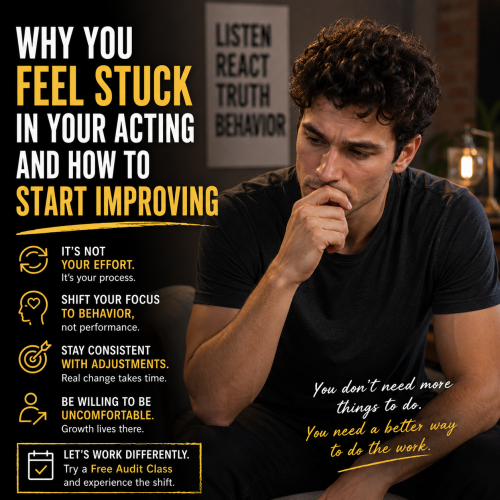
If you feel stuck in your acting, it is not because you are not working hard enough. Learn what is actually holding you back and how to shift your process so your work starts to change.
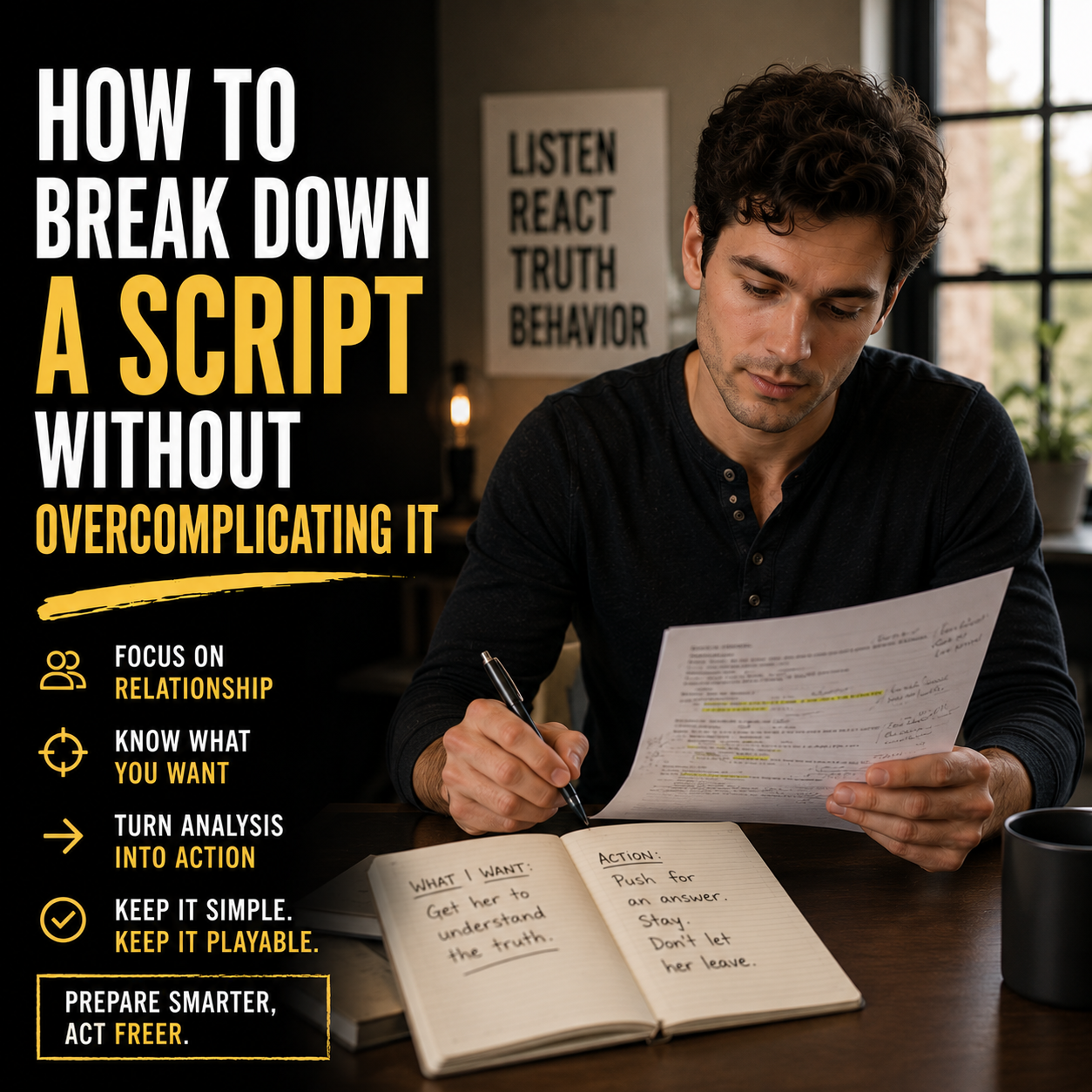
Most actors turn script analysis into something heavy and confusing that does not actually help their performance. Learn how to break down a script in a simple, usable way that keeps you connected and responsive.